
Training-Data Governance and Provenance for Enterprise GenAI (2026)
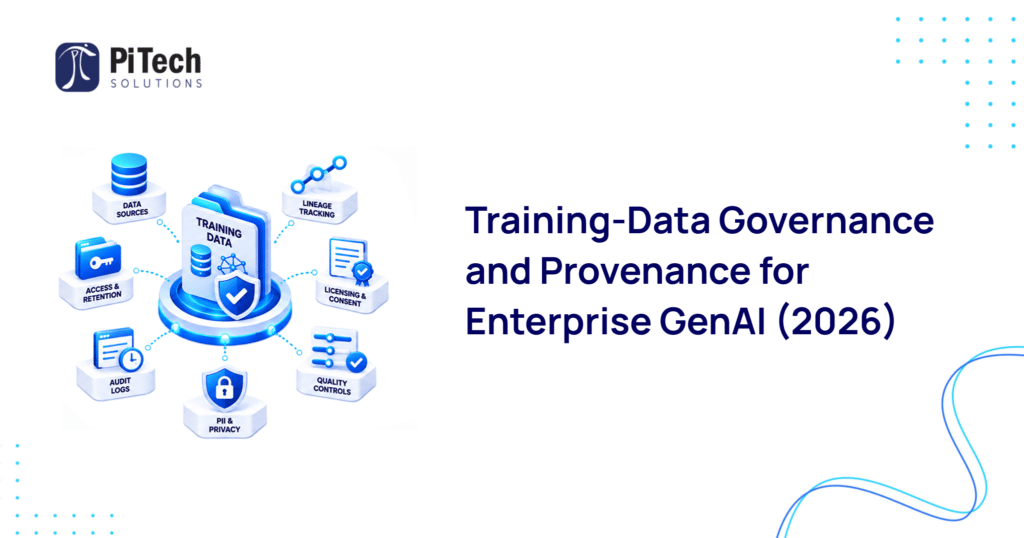
A model inherits its data’s flaws Generative AI learns patterns from data, and whatever is wrong with that data, missing rights, embedded bias, poor quality, leaked personal information, flows into the model and out through its outputs. For an enterprise in a regulated industry, that makes training data a governance problem, not just an engineering […]
AI Incident Response and Serious-Incident Reporting for Regulated AI (2026)
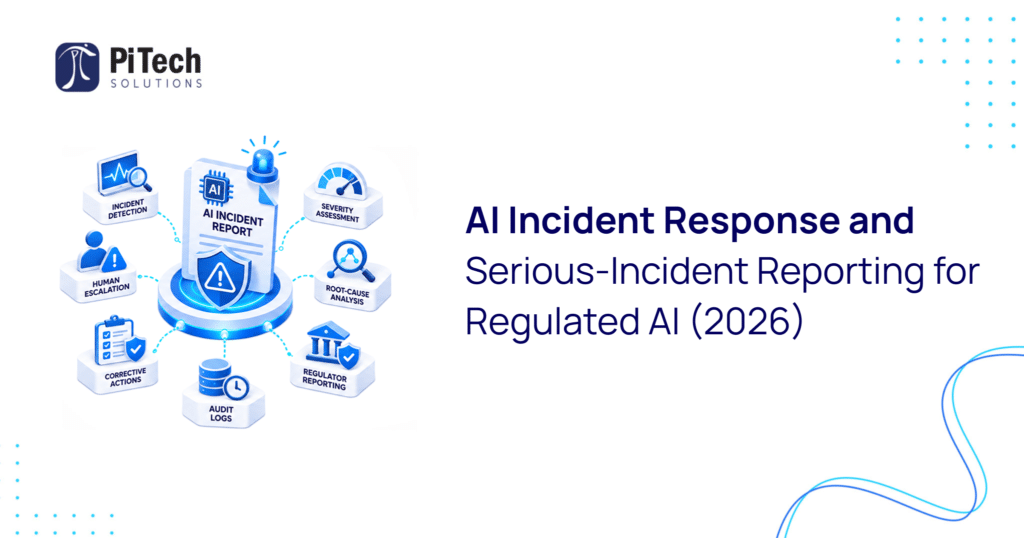
AI fails differently, so incident response has to change Traditional incident response is built around systems going down. AI breaks that model. A model can fail while the system stays up, producing outputs that are wrong, biased, or unsafe without a single alarm firing, and an autonomous agent can take a harmful action and repeat […]
DORA and Operational Resilience: What It Demands and Why US Financial Firms Are Adopting It (2026)
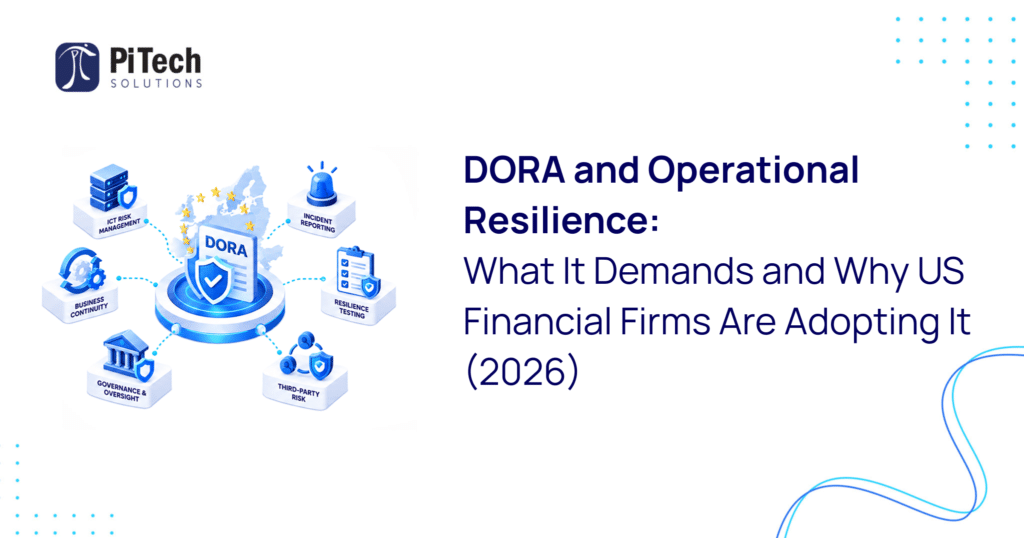
Resilience became a hard requirement For financial firms, the risk that a technology failure, a cyberattack, or a provider outage disrupts critical services is no longer governed only by internal policy and supervisory expectation. In the EU, the Digital Operational Resilience Act (DORA) made operational resilience a binding, structured requirement. DORA has applied since 17 […]
The 2027 US State AI-Law Map: Texas TRAIGA, Colorado’s Reset, and California’s Stack
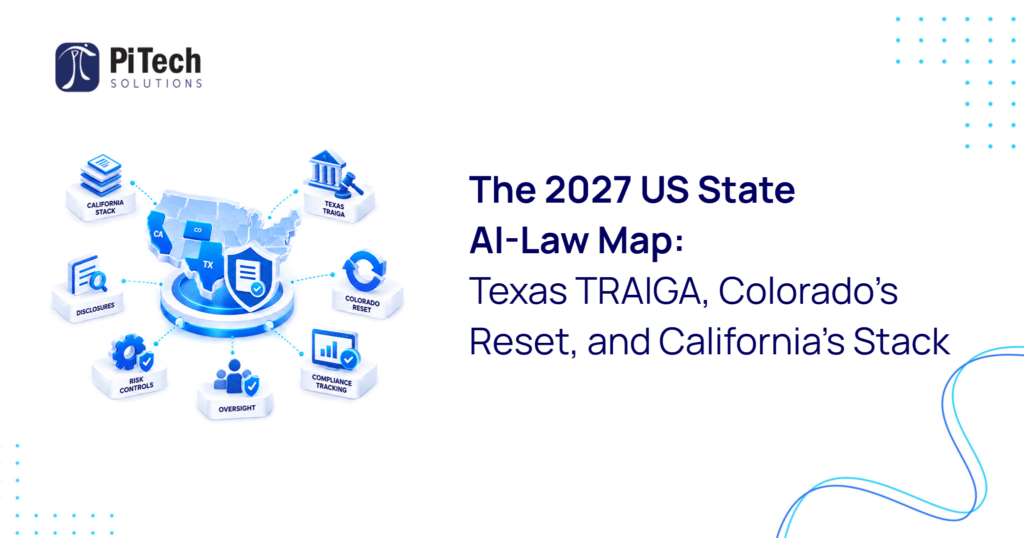
The patchwork is live now With no comprehensive federal AI statute, US AI regulation is a growing patchwork of state laws, and the period from 2026 into 2027 is when several of them become operative. For a company with multistate or national operations, the practical question is not whether state AI rules apply but how […]
The EU AI Act After the Digital Omnibus: What US Regulated Firms Still Have to Do (2026)
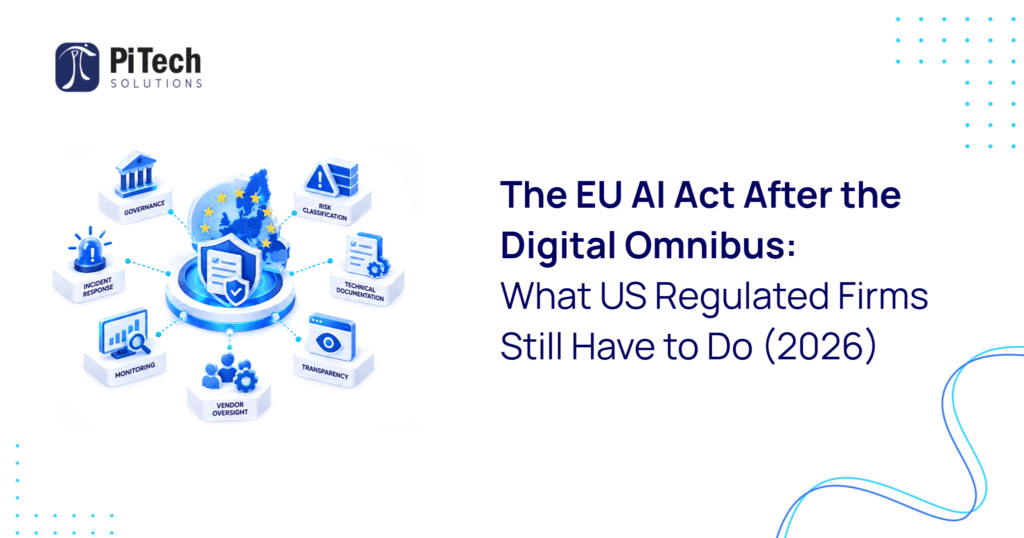
The deadline moved; the obligation did not disappear The EU AI Act reaches US companies whose AI systems or their outputs are used in the European Union, which is why its timeline matters well beyond Europe. In 2026 that timeline changed. Regulation (EU) 2026/1744, known as the Digital Omnibus on AI, was adopted by the […]
What Belongs in an AI Agent Record
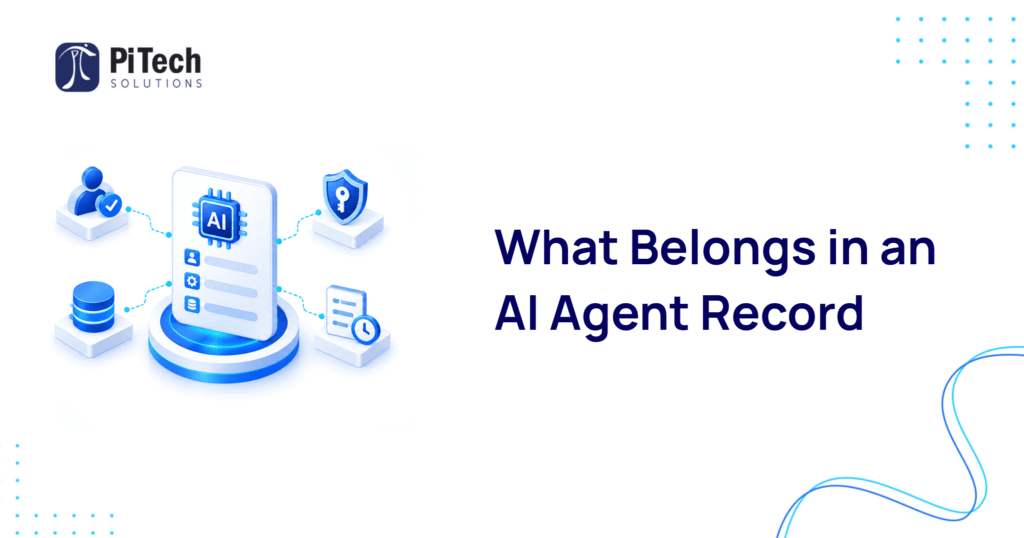
The question What does an inventory entry for an AI agent need to contain so that it stands up when a supervisor asks about it? A model record says what the model is and who validated it. An agent record has to say which agent acted, what it was allowed to touch, who answers for […]
California SB 947: What Employers Should Build Before July 2027
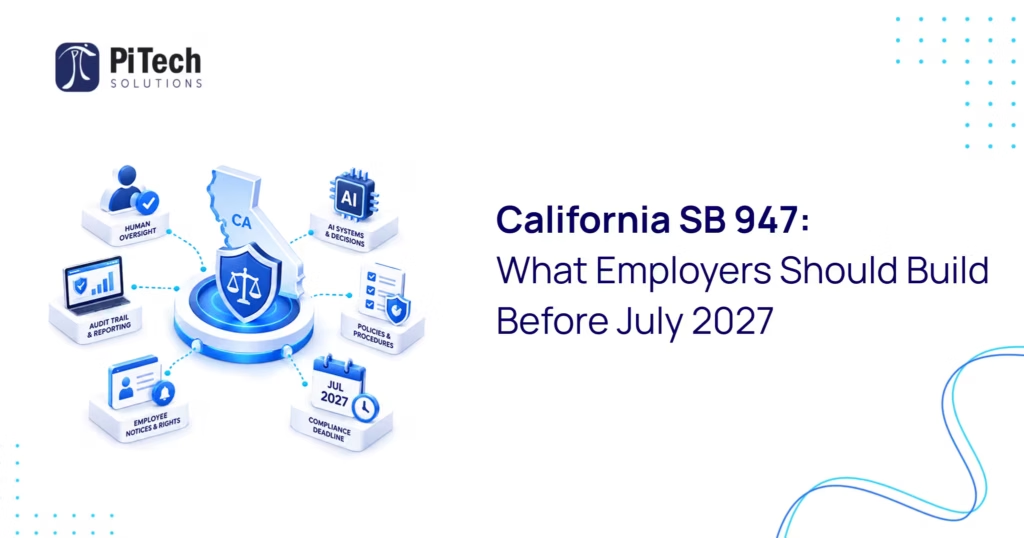
The question California just passed a law on AI in firing decisions. What does an employer actually have to put in place, and by when? SB 947, the No Robo Bosses Act of 2026, was signed by Governor Newsom on 30 September 2026 as Chapter 859 of the Statutes of 2026 and becomes operative on […]
Governing AI in Insurance Claims: Denials, Fraud Detection, and Fair Treatment (2026)
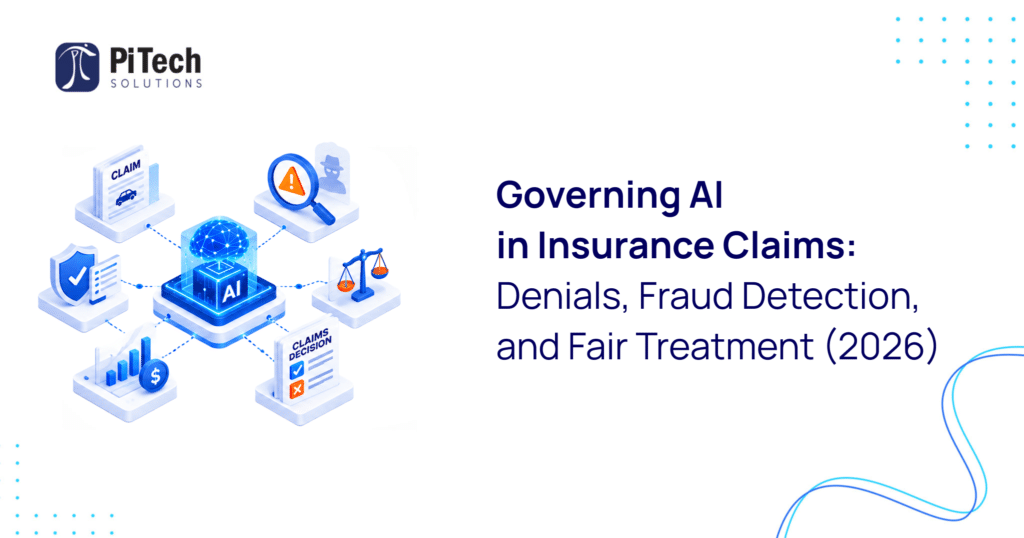
Claims is where AI meets the policyholder Insurers apply AI across the claims lifecycle, to triage, estimate, detect fraud, and support decisions to pay, delay, or deny. It is the point where AI most directly affects a policyholder, and where an inaccurate or unfair automated outcome carries the greatest consequence. Regulators treat claims handling seriously […]
Model Risk Management for AI After SR 11-7: The 2026 Overhaul, SR 26-2, and the GenAI Gap
SR 11-7 is gone, and AI sits in the gap it left For fifteen years, SR 11-7 was the de facto model risk management framework for US banks. On 17 April 2026 the OCC, Federal Reserve, and FDIC jointly rescinded it, along with OCC Bulletin 2011-12, the 2021 BSA/AML model-risk statement, the 1997 credit-scoring guidance, […]
Third-Party and Vendor AI Risk Management for Regulated Industries (2026)
The AI you did not build is still your risk The fastest-growing source of AI risk in regulated organizations is not the models they build; it is the AI arriving through vendors. It comes embedded in software already in use, bought as models and scores, and layered into services, and in every case the organization […]