
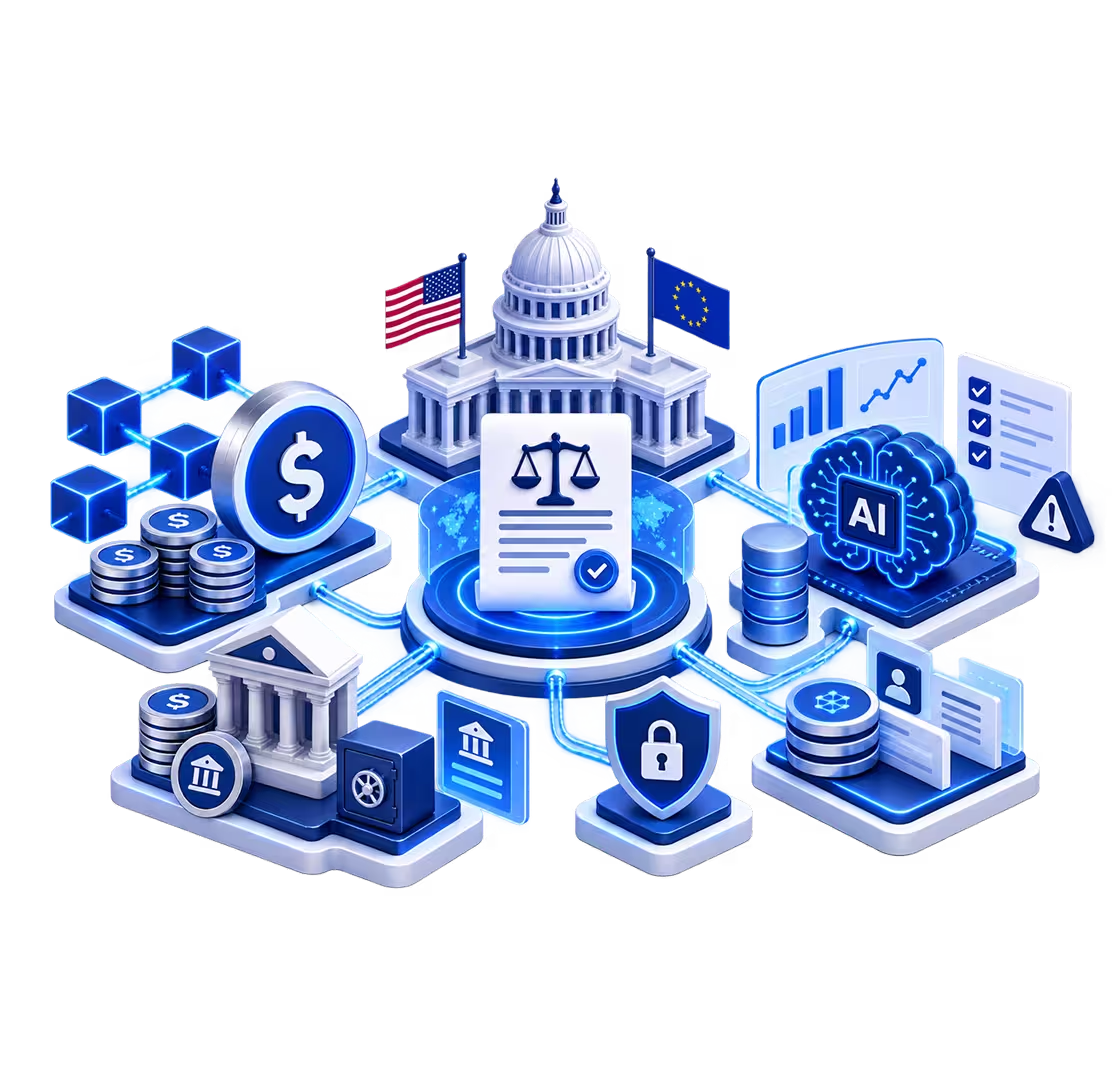
Three stories this week, three different corners of financial technology, and underneath all of them the same theme: the plumbing of the industry is being rebuilt while the rulebook for that plumbing is still being written. For executives in regulated institutions, that combination is the whole strategic problem, and this episode works through what to do about it.
Mike and Laura open on the biggest regulatory development of the month. On August 17, 2026 the U.S. Department of the Treasury issued a Notice of Proposed Rulemaking implementing section 3 of the GENIUS Act, published the next day in the Federal Register with a comment period running to October 19, 2026. The hosts walk the two-stage timeline that matters to a board: licensing requirements expected to take effect January 18, 2027, and then a second, later gate under proposed section 1523.3(a) beginning July 18, 2028, after which digital asset service providers may not offer or sell a payment stablecoin to someone in the United States unless it came from a permitted issuer or a qualifying foreign one. As Laura puts it, that is a supply chain question rather than a legal department question, and it needs a running control rather than an annual attestation.
The second story is the plumbing in the most literal sense. On August 19, 2026 Standard Chartered and HSBC executed the first live tokenised deposit transaction on Swift’s blockchain-based ledger, with seventeen banks from six continents preparing to pilot live transactions on the shared ledger. The hosts dig into why Swift’s own framing matters most: this is an orchestration layer that lets funds move overnight and on weekends before final settlement completes through existing systems. It is an availability play built on top of correspondent banking, not a replacement for it, and Laura explains why that design choice is exactly what distinguishes it from a decade of bank blockchain consortia that quietly wound down.
The third story shifts register. On August 19, 2026 Stripe announced it agreed to acquire OpenRouter, a routing layer that Stripe’s own announcement says helps businesses route and optimize token usage across more than four hundred models from more than eighty providers. Bloomberg reported a price of more than seven billion dollars, though Stripe published no purchase price and declined to comment on the figure. The hosts argue the thesis is metering rather than modeling, and trace the second-order consequence for regulated institutions: if models are selected dynamically per request, model risk documentation has to describe a policy rather than a model.
That bridges to the segment the hosts flag as the most valuable in the episode. On April 17, 2026 the OCC, in coordination with the Federal Reserve Board and the FDIC, issued updated model risk management guidance that explicitly states generative AI and agentic AI models are not within its scope, with a request for information on bank AI use still to come. Laura is blunt about what that means: the absence of guidance is not the absence of accountability, and no examiner will accept “it was out of scope” when a generative system misfires in a credit decision or a fraud queue. She lays out three concrete moves for a chief risk officer, and explains why agentic systems in particular have quietly crossed the line from model risk into operational risk.
To learn more about PiTech Solutions and how we help institutions in regulated industries navigate exactly this kind of change, visit us at pitechsol.com.