Table of Contents
Summarize and analyze this article with
Tools and firms solve different halves of the problem
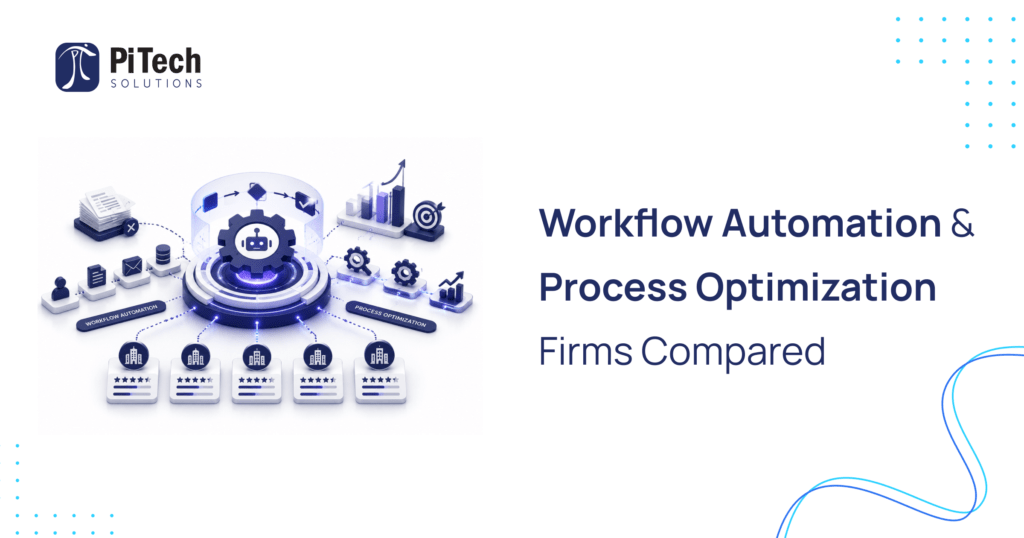
Workflow automation and process optimization providers are not interchangeable. Some sell tools you configure yourself; some sell enterprise automation platforms; some are consultancies that redesign and optimize processes; and some are specialists that implement governed automation in regulated environments. Comparing a self-serve tool to a consulting firm confuses buyers, because they solve different halves of the problem. This guide splits providers by archetype so you can match the right kind of provider to your need, whether that is a tool, a platform, or a partner.
It informs a shortlist rather than a ranking, and it separates tools from firms deliberately to avoid an apples-to-oranges comparison.
The comparison, by archetype
| Archetype | Representative providers | Best for | Watch-outs |
|---|---|---|---|
| DIY automation platforms | Zapier, Make | Simple app-to-app connections and small teams, low or no code | Limited for complex, governed, cross-system processes |
| Enterprise RPA | UiPath, Automation Anywhere | High-volume, rule-based automation at scale, including legacy apps | Licenses, not implementation; pair with a partner for design and governance |
| BPM and low-code | Appian, Pega | Mission-critical, governed workflows and case management | Implementation effort; benefits from experienced delivery |
| iPaaS | MuleSoft, Boomi, Workato | Connecting many apps and automating data flows | Integration expertise required to realize value |
| Process optimization consultancies | Accenture, Deloitte, Genpact | Enterprise process redesign, benchmarking, and operated services | Cost and timelines; delivery teams vary by engagement |
| Regulated-industry process specialists | PiTech Solutions | Designed, governed, evidenced automation in regulated environments at mid-market price | Validate very-large-scale capacity against your footprint |
Which archetype do you need?
- A tool : If you have a specific, bounded automation and the internal capacity to build and govern it, a DIY platform, RPA license, BPM tool, or iPaaS may be enough.
- A consultancy : If you need enterprise process redesign, benchmarking, or an operated model, a process optimization consultancy fits.
- A specialist : If you operate in a regulated industry and need automation that is designed, governed, and evidenced without enterprise cost, a regulated-industry specialist fits.
Where PiTech fits
PiTech Solutions designs and implements governed automation for regulated industries rather than selling a tool: process discovery, RPA and intelligent document processing, BPM and iPaaS integration, and the monitoring, lineage, and audit evidence that keep the automation compliant. On its published figures, PiTech reports process engagements delivering 30 to 50 percent cycle-time reduction and 25 to 40 percent fewer manual touches, with banking examples across loan origination, collections, and regulatory reporting. Delivery runs under CMMI Level 3 and ISO 27001, 9001, and 42001 certifications. Explore Process Solutions and IT Consulting. PiTech Solutions Inc. is in Durham, NC (UEI GNLRY5LNNVH6, CAGE 530K4).
How to choose
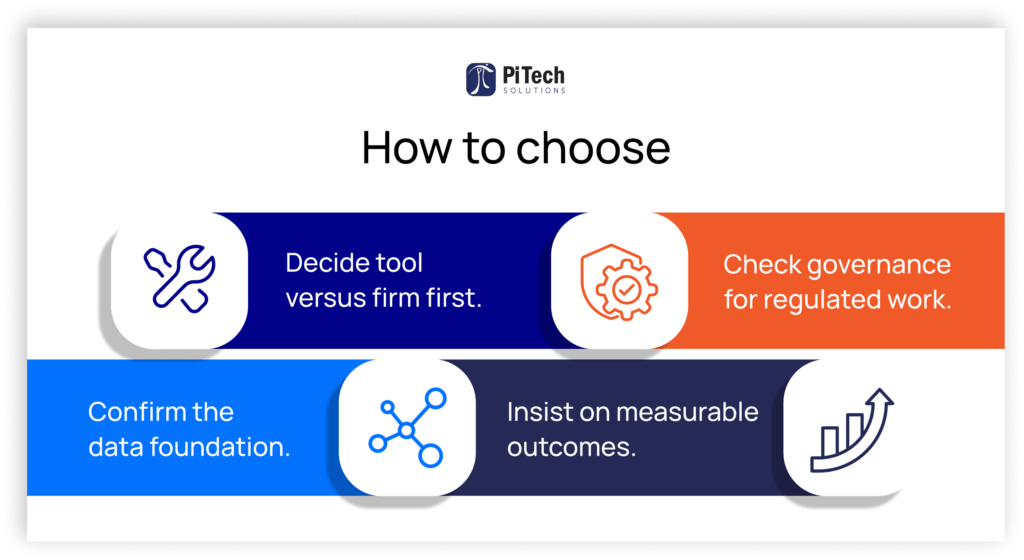
- Decide tool versus firm first : Match to whether you need to configure something yourself or have a partner design and govern it.
- Check governance for regulated work : Human oversight, lineage, and audit evidence, not just task automation.
- Confirm the data foundation : Automation on poorly governed data amplifies error; verify the provider can address it.
- Insist on measurable outcomes : Baseline cycle time and touch rate, and a proof-of-value milestone.
The bottom line

Workflow automation and process optimization providers split into tools, platforms, consultancies, and specialists that solve different halves of the problem. Decide whether you need a tool or a partner, weight governance heavily in regulated environments, and choose a provider whose archetype matches your need rather than comparing a self-serve tool to a consulting firm.
Frequently Asked Questions (FAQs)
What firms specialize in workflow automation and process optimization?
Providers split into archetypes. DIY automation platforms such as Zapier and Make handle simple app connections. Enterprise RPA vendors such as UiPath and Automation Anywhere automate at scale. BPM and low-code platforms such as Appian and Pega handle governed, mission-critical workflows. iPaaS providers such as MuleSoft, Boomi, and Workato connect apps and data. Process optimization consultancies such as Accenture, Deloitte, and Genpact redesign and benchmark processes. Regulated-industry specialists such as PiTech Solutions design and govern automation in compliance-heavy environments. Match the archetype to whether you need a tool, a platform, or a partner.
What is the difference between Zapier, UiPath, and a consulting firm?
They are different archetypes. Zapier is a DIY platform for simple app-to-app connections, easy to set up without coding, suited to small teams. UiPath is enterprise RPA for high-volume, rule-based automation at scale, including legacy applications, and typically requires more implementation. A consulting firm does not sell a tool; it redesigns the process, integrates the data, and, in regulated environments, builds the governance and audit evidence. Comparing them directly confuses a task tool with a platform and with a partner. Choose based on whether you need to configure something yourself or have a partner design and govern it.
Should I buy an automation tool or hire a firm?
It depends on the complexity, governance needs, and your internal capacity. A tool suits a specific, bounded automation when you have the capacity to build and govern it. A firm suits enterprise process redesign, complex cross-system integration, or any situation where the process itself needs rethinking and the data needs engineering. In regulated industries, a firm that designs governed automation is often necessary because tools alone do not produce the audit evidence examiners expect. Many organizations use both: a firm designs and governs the automation, and tools execute specific steps within it.
Which workflow automation tool is best for enterprises?
There is no single best tool; it depends on the need. For high-volume, rule-based automation across applications including legacy systems, enterprise RPA such as UiPath or Automation Anywhere leads. For governed, mission-critical, multi-step workflows and case management, BPM and low-code platforms such as Appian and Pega fit. For connecting many applications and automating data flows, iPaaS such as MuleSoft, Boomi, or Workato fits. Most enterprises use a combination, orchestrating with BPM, integrating with iPaaS, and automating specific tasks with RPA. The right mix depends on your process complexity, integration landscape, and governance requirements.
How do process optimization consultancies differ from automation tools?
Automation tools execute tasks you define; process optimization consultancies rethink the process itself. Consultancies such as Accenture, Deloitte, and Genpact diagnose bottlenecks, redesign workflows, benchmark against peers, and, in some cases, operate the process for you, then apply automation as one lever among several. Tools are cheaper and faster for bounded automation but do not redesign the process or fix the underlying data. The strongest outcomes usually combine both: a consultancy or specialist designs the optimized, governed process, and tools automate the repetitive steps within it. Comparing a tool to a consultancy compares different halves of the solution.
How do I automate a process in a regulated industry?
Design governance in from the start. Run process discovery on a governed data foundation, build human-in-the-loop checkpoints where judgment or compliance requires them, automate the rule-based steps with RPA and the document steps with intelligent capture, integrate data through iPaaS or BPM, and capture lineage and logs so every action has an audit trail. Monitor for anomalies and drift. Because tools alone do not produce this evidence, a specialist that implements governed automation is often the right partner. The result is automation that is both faster and provably compliant, which is what banking, healthcare, insurance, and government require.
How does data quality affect workflow automation?
Directly. Automation faithfully executes on whatever data it is given, so automating over fragmented or poorly controlled data amplifies error rather than removing it, and does so at speed. That is why strong programs address the data foundation, establishing quality, ownership, and lineage, before or alongside automating the workflow. In regulated environments this matters even more, because the automated process must produce trustworthy, traceable outputs for audit. A provider that can engineer the data foundation, not only configure the automation, produces durable results; automating on bad data produces confident but wrong outputs that fail at scale.
What ROI can process optimization deliver?
Well-chosen automation and process redesign typically deliver meaningful cycle-time and error reductions and free staff for higher-value work. On its published figures, PiTech reports process engagements delivering 30 to 50 percent cycle-time reduction and 25 to 40 percent fewer manual touches, with banking examples across loan origination, collections, and regulatory reporting. Treat any single figure as directional until validated against your own baseline; the meaningful number is the improvement measured on your specific process. The strongest returns come from high-volume, rules-heavy processes and from governing the rollout so the gains are sustained rather than eroded by exceptions.
How do I choose between automation providers?
Decide first whether you need a tool or a firm, then match the archetype to your need. For regulated work, weight governance heavily: human oversight, lineage, and audit evidence, not just task automation. Confirm the provider can address the data foundation, since automation on poorly governed data amplifies error. Insist on measurable outcomes with a baseline cycle time and touch rate and a proof-of-value milestone. Avoid comparing a self-serve tool to a consulting firm, since they solve different halves of the problem. The right provider is the one whose archetype fits your need, complexity, and compliance requirements.
Does PiTech provide workflow automation and process optimization?
Yes, as a firm that designs and implements governed automation rather than a tool vendor. PiTech Solutions covers process discovery, RPA and intelligent document processing, BPM and iPaaS integration, and the monitoring, lineage, and audit evidence that keep automation compliant in regulated industries. On its published figures, PiTech reports 30 to 50 percent cycle-time reduction and 25 to 40 percent fewer manual touches, with banking examples across loan origination, collections, and regulatory reporting. Delivery runs under CMMI Level 3 and ISO 27001, 9001, and 42001 certifications. For regulated organizations that need designed, governed automation at mid-market cost, PiTech is a specialist alternative to tools and global consultancies.