
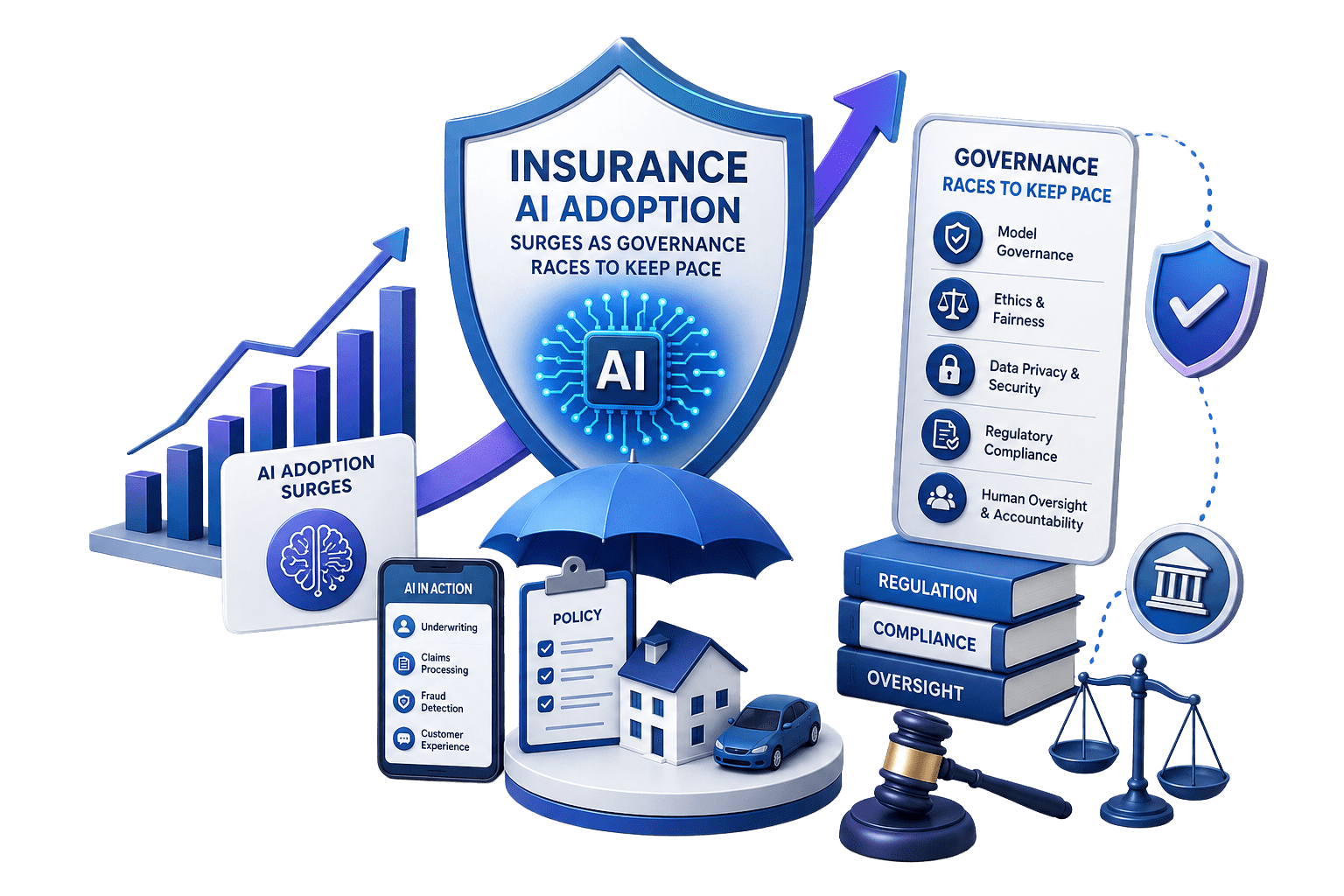
Artificial intelligence is moving through the insurance sector faster than almost anyone forecast, but the guardrails are straining to keep up. In this episode, Mike and Laura unpack the widening gap between rapid AI adoption and the governance, regulation, and fraud defenses that regulated insurers depend on, and what it all means for the C suite.
Adoption is outpacing oversight. Roughly sixty four percent of U.S. insurance agencies now use AI in at least one workflow, nearly double the figure from two years ago. Yet ninety eight percent plan to invest more this year while only thirteen percent have a formal AI use policy in place, a governance gap that surfaces during market conduct exams.
Regulators are watching closely. More than half of states have adopted the NAIC Model Bulletin on the use of AI systems by insurers, and the NAIC AI Systems Evaluation Tool is now in a twelve state pilot running through September. Existing insurance laws still apply to AI, and examiners are gaining a standardized playbook for reviewing insurer governance programs.
Underwriting and claims are where the value shows up. AIG’s generative AI underwriting assistant, built with Anthropic and Palantir, prioritizes carrier submissions and automates routine decisions so underwriters focus on complex risk. On claims, well integrated AI is delivering up to seventy five percent faster resolution and meaningful cost reductions, with consumer trust climbing.
The fraud frontier is the flip side. The same generative tools fuel synthetic image and deepfake fraud. The Verisk study found ninety eight percent of insurers say AI based photo editing drives digital fraud, only seven percent of anti fraud teams feel well prepared, and a new cyber coverage gap emerged at the start of the year. The winners will pair fast adoption with disciplined governance and measurement.
To learn more about how PiTech Solutions helps regulated businesses bring technology strategy and governance discipline together, visit pitechsol.com.