


4–6 weeks
Due diligence turnaround
68%
Data conflicts auto-resolved
Data First
Integration sequencing principle
Pre-Close
Compliance gap identification
Client Snapshot
Industry
Banking & Financial Services
Solution
M&A | IT Consulting | Data Solutions
Complexity
Very High
Delivery
Due Diligence + Program Management
The Problem
Technology due diligence in bank M&A is frequently compressed, under-resourced, and narrowly scoped missing the risks that drive post-close cost overruns. BSA/AML infrastructure quality is the most consistently underweighted risk: the acquirer inherits the target’s customer risk profiles, transaction monitoring gaps, and any open regulatory concerns and is responsible for remediating them on the integration timeline. Technology problems discovered after close become examination findings for the combined institution.
Federal Reserve and OCC merger applications require applicants to demonstrate that the combined institution’s technology architecture is sound and that integration risks are identified and manageable. Technology problems discovered post-application create amendment filings and examiner concern about management capability. Comprehensive pre-close diligence is not a luxury it is a merger application requirement.
Ready to Start?
Schedule an M&A Technology Due Diligence Consultation
Get a candid assessment of your transaction’s technology risk profile and integration sequencing. We work within deal timelines.
63%
of bank mergers that failed to deliver expected synergies cited technology integration problems as the primary factor per Accenture research on financial services M&A. The most common root cause: data harmonization failures that persisted in combined systems for years after physical integration completed.
How PiTech Delivers
01
Technology Due Diligence
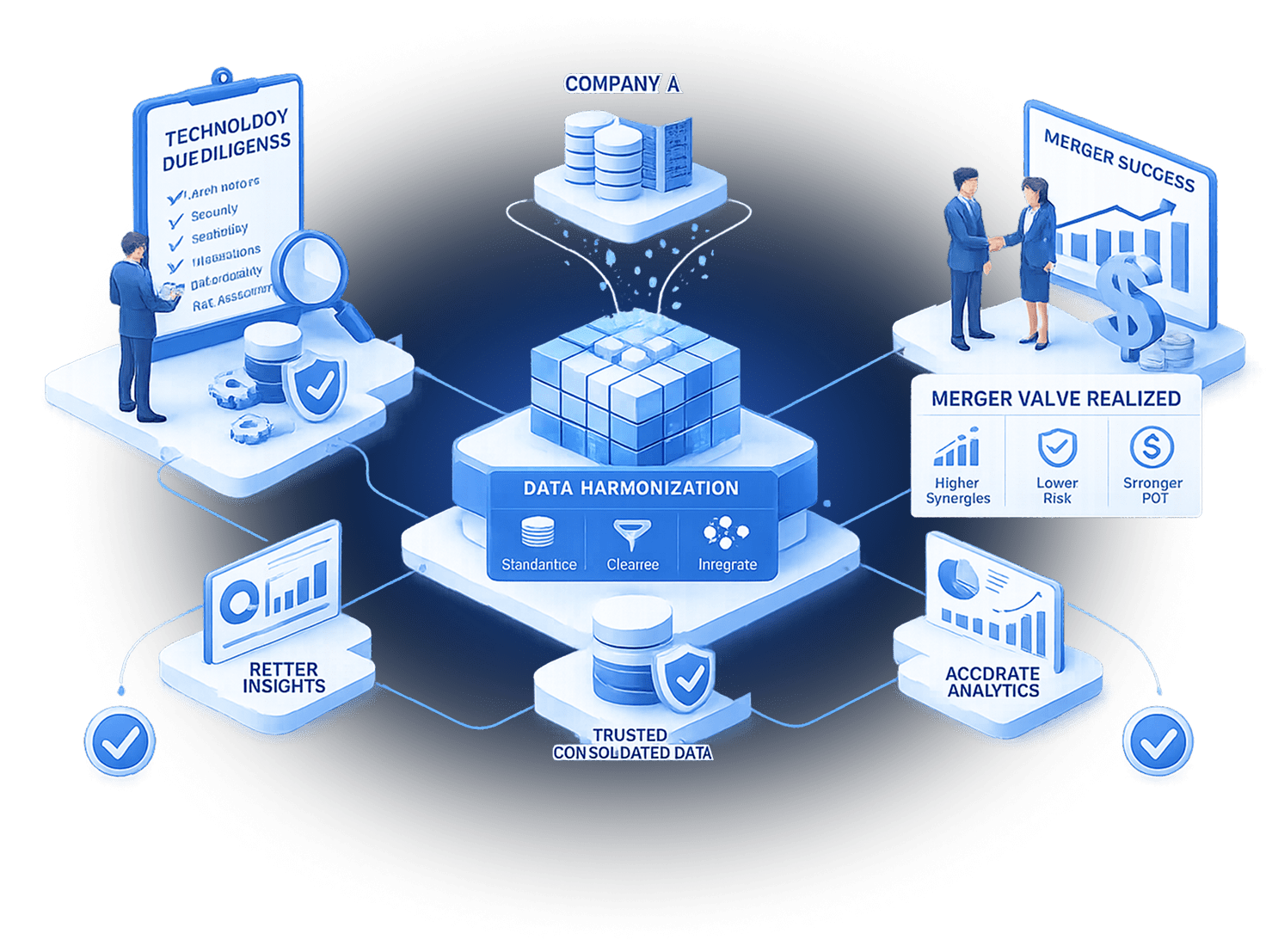
Five-domain assessment covering application architecture and technical debt, cybersecurity posture, data quality and integration complexity, regulatory compliance status, and people and process maturity with a red/yellow/green risk summary structured around deal-structuring implications.
02
Compliance Gap Identification
Target’s BSA/AML program, open examination findings, and compliance management system assessed against acquirer standards and regulatory expectations. Compliance integration plan drafted pre-close not discovered during merger application review.
03
Data Harmonization First
Golden record creation for all customers of the combined institution identity resolution, duplicate detection, survivorship rule application before system consolidation begins. 68% of conflicts resolved automatically through PiTech’s proven conflict resolution methodology.
04
Regulatory Continuity Through Integration
Proven Outcomes
68%
of data conflicts auto-resolved in banking migration engagement
73%
of at-risk data assets protected through intelligent resolution
43%
compliance overhead reduction post-integration
Proven Outcomes
18+
Years in Regulated Industries
What You Gain
4–6 weeks
Complete technology risk picture delivered before deal close and regulatory filing
68%
Data conflicts auto-resolved during post-merger harmonization
Pre-Close
Compliance gaps identified and integration plan ready before regulatory application
No Gaps
Regulatory reporting continuity with zero submission gaps through the integration period
What's Included
Technology due diligence assessment
BSA/AML program assessment
Integration complexity scoring
Data harmonization execution
Compliance integration program
Regulatory reporting continuity
Examiner relationship coordination
Frequently Asked Questions
Why is data harmonization done before system consolidation?
System consolidation builds on customer and account data. If data is not harmonized first, the combined system runs on duplicated, conflicted data which is operationally and regulatorily worse than two separate systems. Data harmonization first ensures that when the systems consolidate, they consolidate on a clean, validated foundation that supports accurate regulatory reporting and AML monitoring from day one.
What is the most frequently missed technology risk in bank M&A due diligence?
BSA/AML infrastructure quality is consistently underweighted in compressed due diligence programs. The acquirer inherits the target’s customer risk profiles, transaction monitoring gaps, and any open regulatory concerns at close and is expected to remediate them on the same timeline as system integration. Discovering a material AML program gap after close is substantially more expensive than identifying it in diligence.
How long does post-merger data harmonization take for a regional bank?
For a community or mid-tier regional bank merger, customer, account, and regulatory reporting data harmonization typically runs 6–9 months from data access to validated golden records. Larger programs with more complex product sets multiple business lines, acquired subsidiaries, or multi-state operations typically run 12–18 months. PiTech’s automated conflict resolution consistently compresses these timelines versus manual harmonization approaches.
What does the compliance integration program include for the Fed/OCC merger application?
PiTech structures the compliance integration plan to map directly to the Fed and OCC merger application technology integration requirements identifying the target’s compliance gaps, documenting the remediation plan with defined milestones, and producing the combined compliance program design in a format that satisfies examiner review. The plan is built to be submitted, not just filed internally.
How does PiTech maintain BSA/AML monitoring continuity during integration?
PiTech designs BSA/AML continuity into the integration architecture: transaction monitoring runs on both legacy systems throughout integration, the combined monitoring environment is validated against both legacy customer risk profiles before legacy decommission, and the BSA/AML data harmonization workstream is treated as an accelerated track given the regulatory sensitivity of any monitoring gaps during the merger review period.
Technology due diligence done right changes deal outcomes. Data harmonization determines whether a merger delivers its promised value.
PiTech has done both for regulated banks under time pressure. Contact us for a no-obligation M&A technology consultation.
Related Use Cases

Digital Lending Workflow Automation
PiTech automates the full loan origination lifecycle from application intake through closing and servicing handoff reducing consumer origination cycle time

Data Lakehouse Modernization
PiTech has delivered complex data platform migrations for financial institutions compressing an 18-month migration to under 11 months, auto-resolving 68%

BSA/AML Data Engineering
PiTech engineers AML data infrastructure from source system to alert integrating transaction feeds across all product channels, unifying customer due
Reach Our Customer Service Team
-
Address
4000 Sancar Way, Suite 205, Durham, NC 27709
-
Contact Details
(919) 439-3163