

Fill out the form below to Download the Whitepaper
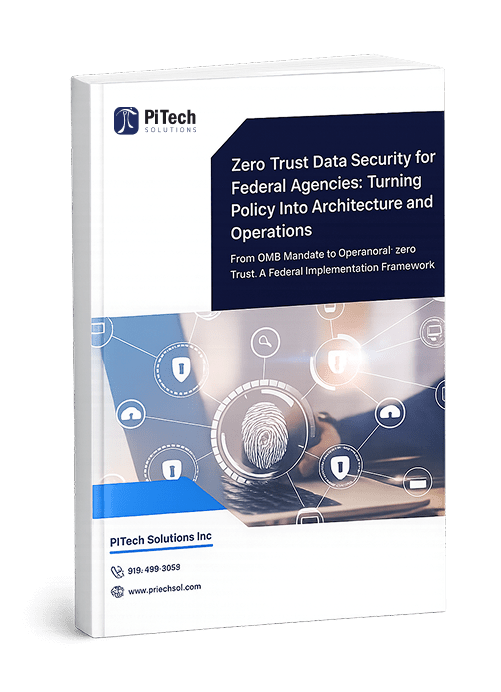
Since the U.S. government’s Zero Trust mandate in 2021, federal agencies have struggled to move beyond policy into fully operational security systems. This whitepaper outlines the critical gaps in implementing Zero Trust, particularly in the data security pillar, and provides a federal implementation framework to address these challenges. By translating policy into architecture and operations, the paper offers a practical roadmap to achieve true Zero Trust data security in federal environments.
Discover What This Whitepaper Covers:
What Zero Trust Actually Requires
Understand the key principles of Zero Trust architecture as defined by NIST SP 800-207, including data resource protection, secure communications, and per-session access controls. Learn why Zero Trust is not just about products like MFA or perimeter security but requires a comprehensive, integrated approach across identity, devices, networks, applications, and data.
The Federal Data Classification Gap
Explore the structural barriers federal agencies face in achieving effective data classification, including the volume of data, legacy system limitations, and inconsistent classification across departments. Discover how these barriers prevent effective Zero Trust data security and what must be done to overcome them.
A Federal Zero Trust Data Security Implementation Framework
Follow a detailed, phased approach to implementing Zero Trust data security, from identity and data inventory to access control policy implementation and continuous monitoring. The framework aligns with NIST and CISA guidelines and addresses the most common obstacles to successful implementation.
FedRAMP and Cloud Integration
Learn how federal agencies can integrate Zero Trust across cloud and on-premises environments. The paper outlines the importance of selecting the right cloud services and ensuring consistent policy enforcement across both environments to meet Zero Trust requirements.
Key Takeaways from the Whitepaper
- Practical steps for bridging the gap between policy and operational Zero Trust security
- A roadmap for achieving data-centric Zero Trust controls
- Insights into overcoming data classification challenges and achieving operational security
- How to integrate Zero Trust into cloud and on-premises environments for comprehensive protection